Technology evolves. So does the way we support the body’s electrical communication systems.
Over the years, Tennant technologies have progressed far beyond the earlier-generation systems that introduced many people to voltagebased wellness concepts. While previous-generation devices helped pioneer awareness around electrophysiology, today’s currentgeneration Tennant technologies represent a major leap forward in responsiveness, usability, protocol efficiency, and adaptive interaction.
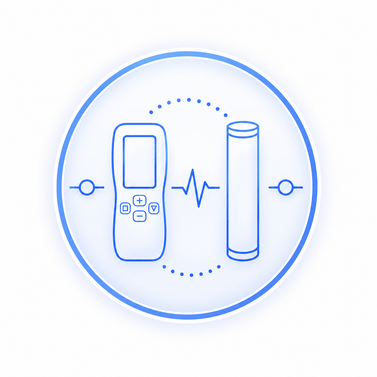
The Tennant BioModulator® and Tennant BioTransducer® were developed as part of a next-generation coordinated system focused on:
- Adaptive biofeedback
- Real-time responsiveness
- Streamlined protocols
- Targeted voltage support
- Organized communication
- Coordinated polarity support
- Guided educational systems
The result is not simply newer hardware.
It is an entirely more advanced, more responsive, and more practical system-based approach to bioelectric wellness
The Biggest Advancement: Adaptive Biofeedback
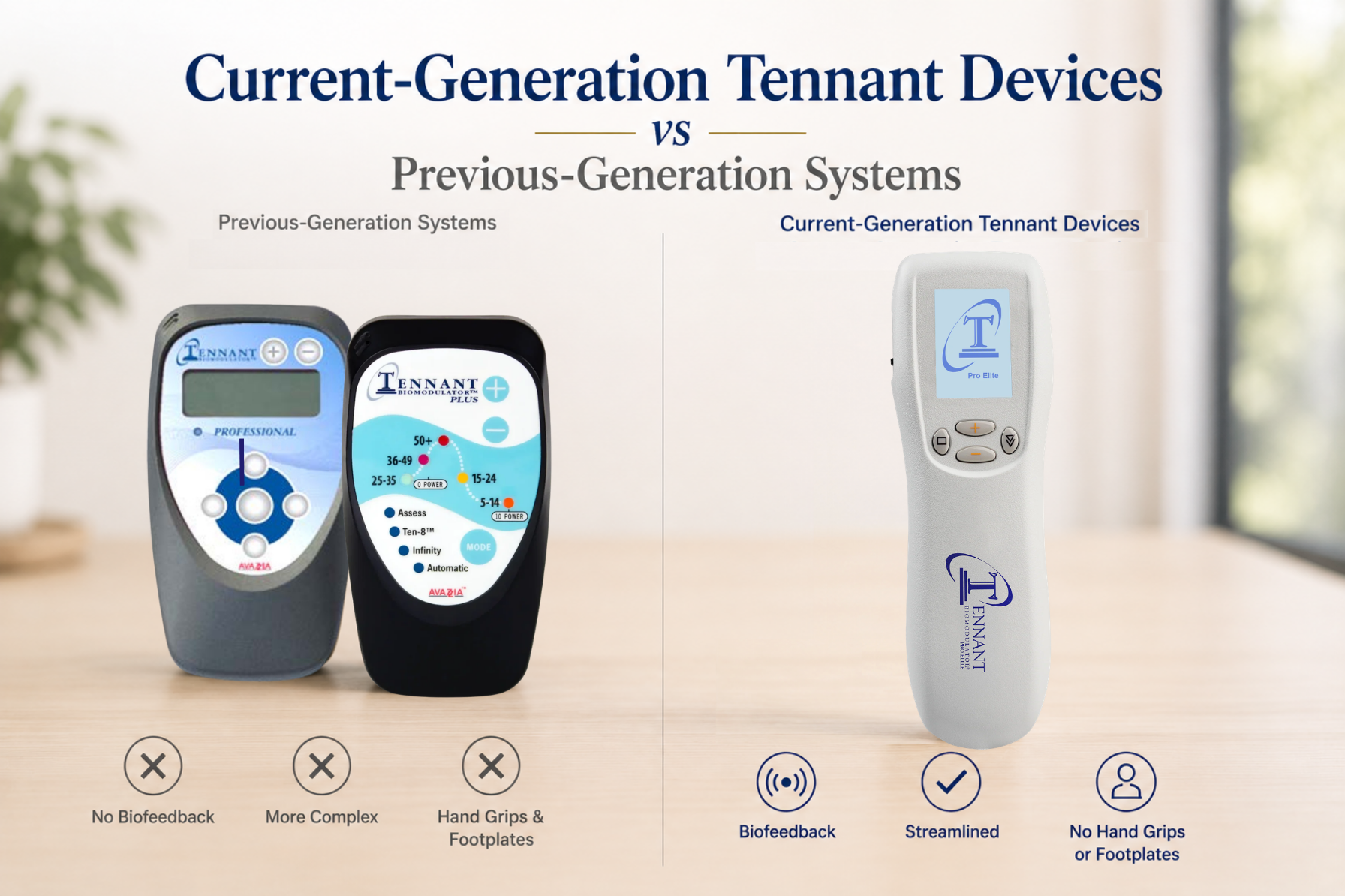
One of the most important differences between current-generation Tennant technologies and previous-generation systems is adaptive biofeedback
Older-generation devices primarily relied on generalized electrical output delivered broadly throughout the body. Applications often depended on large accessory systems, extended workflows, and static output methods.
Current-generation Tennant systems work differently.
The Tennant BioModulator® continuously responds to tissue interaction in real time. Rather than delivering the same fixed output continuously, the device dynamically adjusts based on resistance patterns, signaling interaction, and electrical responsiveness during application.
This represents a major evolution in electrophysiology-based technology.
Instead of forcing generalized stimulation through the body, the system intelligently interacts with depleted areas requiring voltage support That changes everything.
Moving Beyond Bulky Hand Grips and Footplates
Previous-generation systems commonly relied on:
- Hand grips
- Footplates
- Whole-body current streaming
- Large Class III-style accessory systems
- Longer generalized sessions
- Extensive setup procedures
While these systems were foundational during earlier stages of development, applications often became time-intensive and less targeted. Current-generation Tennant technologies dramatically simplify this process.
The Tennant BioModulator® allows direct targeted application to areas of depleted communication and voltage imbalance without requiring users to sit connected to bulky accessories for extended periods.
This evolution helps create applications that are:
- More precise
- More responsive
- Easier to use
- More practical for daily life
- Better integrated into guided protocols
The difference is not subtle.
It is night-and-day technology.
Real-Time Responsiveness Creates a Smarter System
Biological systems constantly change.
Tissue resistance changes. Communication pathways change. Electrical signaling changes. Stress patterns change. Voltage
patterns fluctuate throughout the day.
Current-generation Tennant devices were designed around this reality.
The Tennant BioModulator® continuously reads tissue interaction and dynamically adjusts output during use.
This adaptive responsiveness supports:
- More targeted applications
- Improved workflow efficiency
- Better personalization
- More organized communication support
- Greater consistency during use
This is one of the defining differences between static-output devices and current-generation adaptive systems.
The technology is no longer simply “sending current.
It is interacting.
Streamlined Protocols Changed the User Experience
Another major advancement involves protocol efficiency.
Older-generation systems often required:
- Longer treatment sessions
- More complicated workflows
- Multiple accessory setups
- Broader generalized applications
- Significant time commitment
Current-generation Tennant technologies were developed around streamlined protocols that significantly reduce complexity and treatment time.
Many guided applications can now be completed in approximately 10–20 minutes depending on the protocol and support approach.
This creates several major advantages:
- Easier daily consistency
- Better long-term usability
- Improved integration into busy schedules
- Simplified learning curves
- More repeatable applications
At Tennant Health, the focus is not simply faster sessions.
The focus is creating a more organized, responsive, and repeatable system.
The Tennant BioModulator®: Advanced Bioadaptive Electrophysiology
The Tennant BioModulator® integrates SCENAR-based technology principles with proprietary Tennant waveform advancements and structured protocols.
Key advancements include:
- Adaptive biofeedback response
- Dynamic waveform modulation
- Real-time tissue responsiveness
- Sub-sensory microcurrent interaction
- Targeted voltage support
- Guided protocol systems
Unlike conventional electrotherapy systems focused primarily on frequency output, the BioModulator® emphasizes waveform design, adaptive communication, and voltage restoration principles.
The system continuously adapts during use, creating a more intelligent and responsive interaction model.
This represents one of the biggest technological leaps in the Tennant framework.
The Tennant BioTransducer®: More Powerful, Faster, and More Advanced
The Tennant BioTransducer® also represents a major advancement over previous-generation scalar systems.
Current-generation BioTransducer technology was designed to provide:
- More powerful scalar-field support
- Improved energetic organization
- Enhanced polarity support
- Simplified usability
- Faster charging technology
- Greater portability
- More efficient daily integration
One of the most noticeable improvements is charging efficiency.
Previous-generation devices often required overnight charging cycles. The current-generation Tennant BioTransducer® utilizes modern rechargeable USB-C charging technology, allowing the device to fully recharge within just a few hours.
This dramatically improves usability for both practitioners and everyday users.
The system is also designed around contact-free operation through a precision-engineered optical scalar delivery system.
Unlike traditional electrotherapy systems, the BioTransducer® works without electrical stimulation or physical contact.
This allows it to integrate seamlessly into the broader Tennant system framework focused on polarity organization and energetic coherence.
Why the Coordinated System Matters
Current-generation Tennant technologies are not designed as isolated standalone devices.
They were developed as part of a broader coordinated framework focused on:
- Voltage support
- Polarity balance
- Adaptive responsiveness
- Organized communication
- Guided applications
- Structured learning systems
The Tennant BioModulator® focuses on adaptive microcurrent interaction and voltage restoration.
The Tennant BioTransducer® complements that process through polarity organization and scalar-field support.
Together, they create a far more complete and coordinated approach than earlier-generation standalone systems.
Education Became Part of the Technology
One of the most overlooked differences between current-generation Tennant technologies and earlier systems is education.
At Tennant Health, device ownership now includes access to a structured educational ecosystem designed to help users better understand:
- Voltage concepts
- Polarity balance
- Adaptive biofeedback
- Guided protocols
- Electrophysiology principles
- Organized communication systems
Official Tennant Health technologies include access to:
- Gated educational platform
- Tennant Talks
- Power Hours
- Guided webinars
- Conferences
- Protocol education
- Ongoing support resource
This educational framework represents a major evolution from earlier-generation approaches where users were often left trying to independently interpret technologies and applications.
Today’s Tennant system is built around both technology and guided understanding.
The Evolution of Healing Is Voltage®
The foundational concepts behind Healing Is Voltage® continue evolving through modern adaptive technologies focused on responsiveness, communication, and organized system support.
Current-generation Tennant systems represent the next phase of that evolution.
The shift from generalized static-output devices toward adaptive, real-time biofeedback systems marks one of the most important technological advancements in the Tennant framework.
This evolution created technologies that are:
- More intelligent
- More targeted
- More streamlined
- More responsive
- More practical
- More user-friendly
- More coordinated
Most importantly, they were designed to work with the body dynamically rather than simply applying generalized output.
That is the defining difference between previous-generation systems and current-generation Tennant technologies.
Frequently Asked Questions
What makes current-generation Tennant devices different?
Current-generation Tennant devices integrate adaptive biofeedback, real-time responsiveness, streamlined workflows, and structured educational systems.
What is adaptive biofeedback?
Adaptive biofeedback refers to technology that continuously responds during applications based on tissue interaction and signaling patterns.
Why are newer Tennant systems more streamlined?
Current-generation systems reduce reliance on hand grips, footplates, and longer generalized workflows in favor of targeted applications and simplified protocols.
What role did SCENAR technology play?
SCENAR technology helped advance adaptive biofeedback concepts, dynamic waveform interaction, and real-time responsiveness used in modern Tennant systems.
Why does Tennant Health emphasize education?
Voltage, polarity, and bioelectric communication concepts require structured learning, guided applications, and evolving educational support systems.
Learn More About New-Generation Tennant Technologies
Tennant Health continues advancing bioelectric education, adaptive microcurrent systems, and structured learning resources inspired by the foundational concepts of Healing Is Voltage®.
Official Tennant Health technologies include ongoing educational support designed to help users better understand adaptive biofeedback, voltage support, polarity balance, and organized communication systems.
Start Today with a FREE Device Discussion
Schedule a personalized educational discussion to learn more about:
- Current-generation Tennant technologies
- Adaptive biofeedback systems
- The Tennant BioModulator®
- The Tennant BioTransducer®
- Voltage and polarity concepts
- Structured protocol systems
- Guided educational support