
A More Complete Way to Explore Scar Support.
Explore a structured approach for fully healed scars that begins with polarity and brings together Tennant technology, targeted bioelectric support and guided owner education.
- Fully Healed Scars
- Polarity-First Sequence
- Guided Owner Education
A Scar Is More Than a Change in Appearance.
Scar tissue forms as the body repairs skin affected by surgery, injury, burns or other trauma. Once healed, the repaired area may look and feel different from the surrounding tissue.
Some scars become less noticeable over time, while others remain raised, indented, tight, tender, numb, itchy or sensitive. Depending on their size and location, fully healed scars can also influence comfort or ease of movement.
Appearance
The surface may differ in color, texture, height or shape.
Sensation
The area may feel different from the surrounding skin.
Movement
Tightness may affect comfort when the surrounding area moves.

Exploring comfort, sensation, movement and the Tennant educational framework—not diagnosing a scar, providing wound care or promising cosmetic removal.
A Fully Healed Scar Can Still Change How an Area Feels.
Not every scar creates an ongoing concern. When one does, its effects may appear through sensation, movement, everyday comfort or how often the area draws your attention.

SensationSensitivity & Tenderness
A healed area may feel unusually sensitive, itchy, tender or uncomfortable when touched or placed under pressure.
MovementTightness & Flexibility
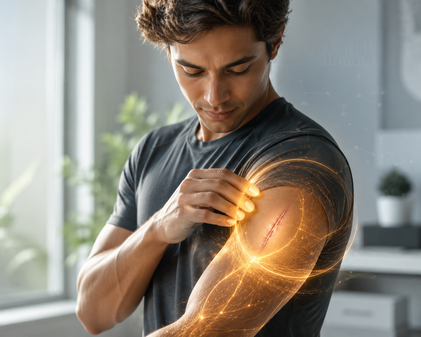
Tightness around a scar may influence comfortable movement, especially when the area crosses a joint or frequently stretches.

Daily LifeEveryday Comfort
Clothing, pressure, exercise, work positions or sleep posture may make a particular area more noticeable during the day.

Personal ExperienceConfidence & Awareness
A visible or frequently noticeable scar may influence confidence, body awareness or comfort in certain personal situations.
The experience matters, but it does not identify the cause. Persistent, worsening or unexplained changes should be discussed with an appropriate licensed healthcare professional.
Understanding the Experience Starts with Better Questions.
A scar’s appearance tells only part of the story. Select each lens to consider its history, current sensations, effect on movement and whether professional evaluation may be appropriate.
How Did the Scar Begin?
Understanding whether a scar followed surgery, an injury, a burn or another event provides useful context. Its origin does not determine its current impact, but it can help organize the conversation.
Consider what originally affected the area.
Notice whether it crosses a joint or frequently moving area.
Confirm that the area is closed and fully healed.
What happened before the scar formed, and approximately when did the area fully heal?
How Long Has the Area Been Fully Healed?
Scars can continue changing in appearance and sensation over time. It is useful to distinguish a longstanding pattern from something new, changing or recently noticed.
Recall the approximate date or stage of life.
Notice whether the area has remained stable or feels different.
Consider whether the experience is constant or occasional.
Has the area felt the same over time, or have you noticed a recent change in appearance, sensation or comfort?
How Does the Area Feel?
Clear descriptions are more useful than broad labels. Consider whether the area feels tight, tender, numb, itchy, sensitive or simply different from the surrounding tissue.
Describe the sensation in your own words.
Notice whether touch, pressure or activity changes it.
Consider how often the sensation appears.
What do you notice in or around the scar, and what appears to make that sensation more or less noticeable?
Does Movement Change the Experience?
A scar located near a joint, the abdomen, back or another frequently moving area may feel different as the surrounding tissue stretches, bends or bears pressure.
Identify which movements make the area noticeable.
Consider how the scar relates to surrounding movement.
Notice whether work, exercise or rest is affected.
Are there movements, positions or activities you approach differently because of how the area feels?
Has the Area Been Professionally Evaluated?
Supportive technology cannot determine why a scar is painful, changing or affecting movement. New, persistent, worsening or unexplained concerns deserve appropriate professional evaluation.
Confirm that the area is fully closed and healed.
Do not ignore unexpected redness, swelling or other changes.
Seek guidance when symptoms persist or worsen.
Is there anything new, unexplained or worsening that should be evaluated before exploring supportive technology?
This educational explorer does not assess a scar, determine the cause of symptoms or replace professional medical advice.
Why Can a Fully Healed Scar Still Matter?
Within Dr. Jerry Tennant’s Healing Is Voltage® framework, a scar is considered not only as repaired tissue, but also as a possible area of interruption within the body’s electrical communication pathways.
The surface may appear completely healed while the broader framework continues to consider polarity, communication and electrical responsiveness across the area. This is why scar support is included within Tennant Health’s structured educational system.
Beyond how the scar looks, how might the area relate to electrical direction, communication and responsiveness within the body’s larger pattern?
Three Relationships Within the Framework
Polarity & Direction
The Tennant framework begins with polarity—the electrical orientation and directional balance considered foundational to the sequence.
Communication Across the Area
A healed surface does not automatically answer how the framework views communication across and around the scar.
Voltage & Responsiveness
The next consideration is electrical support and how the area responds within the broader Tennant System.
The goal is to consider the scar as one part of a connected pattern—not as an isolated surface concern.
Scar Support Follows an Intentional Order.
Within the Tennant System, the process begins with polarity support using the BioTransducer®, followed by targeted adaptive microcurrent with the BioModulator® and structured owner education.
Tennant BioTransducer®
The BioTransducer® comes first within the Tennant sequence. Its contact-free scalar field is used to support polarity, electrical orientation and overall balance before more targeted support is introduced.
- Begins the structured sequence
- Requires no direct skin contact
- Supports polarity and energetic balance
Tennant BioModulator®
After polarity, the BioModulator® provides targeted, contact-applied microcurrent. Its real-time biofeedback reads tissue response and continuously adjusts its output during use.
- Provides targeted electrical support
- Uses direct contact with the body
- Adapts through real-time biofeedback
Structured Application
Owner education explains the purpose, order and responsible application of each technology. Detailed scar-integration guidance remains within official Tennant owner education.
- Explains the role of each technology
- Provides structured protocol education
- Includes continuing owner support
The BioTransducer® and BioModulator® are not interchangeable steps. The Tennant sequence begins with broad, contact-free polarity support and then moves to targeted, contact-applied adaptive microcurrent.
This sequence describes Dr. Jerry Tennant’s Healing Is Voltage® educational framework. It is not a diagnosis, medical treatment plan or guarantee of outcome.
Two Technologies. Different Roles.
The BioTransducer® and BioModulator® provide different forms of support. When used together, the sequence begins with contact-free polarity support and follows with targeted adaptive microcurrent.
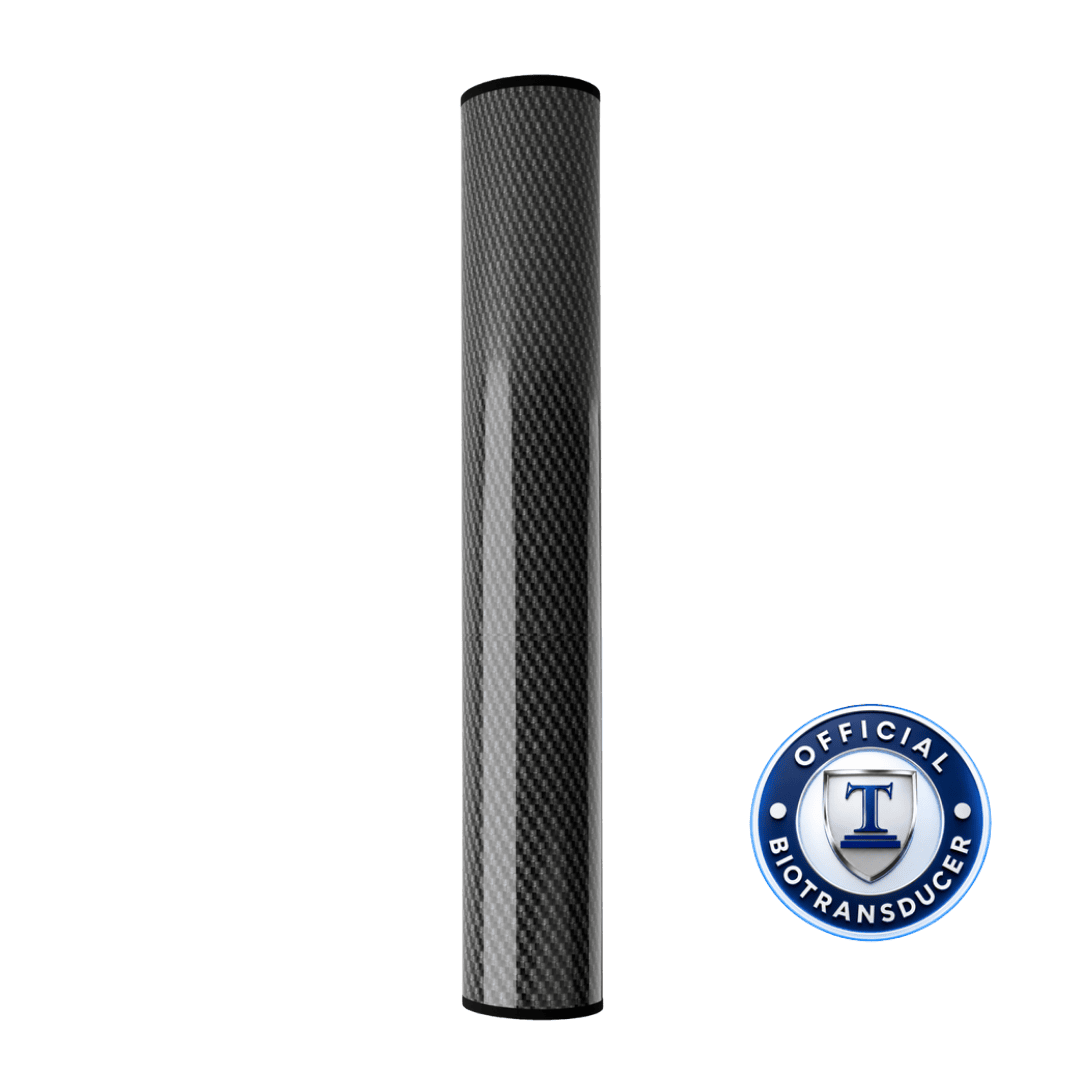
Tennant BioTransducer®
The first technology used within the Tennant sequence to support polarity, electrical orientation and broader energetic balance through a structured, contact-free scalar field.
- Application
- Contact-free
- Primary Role
- Polarity support
- Body Contact
- Not required
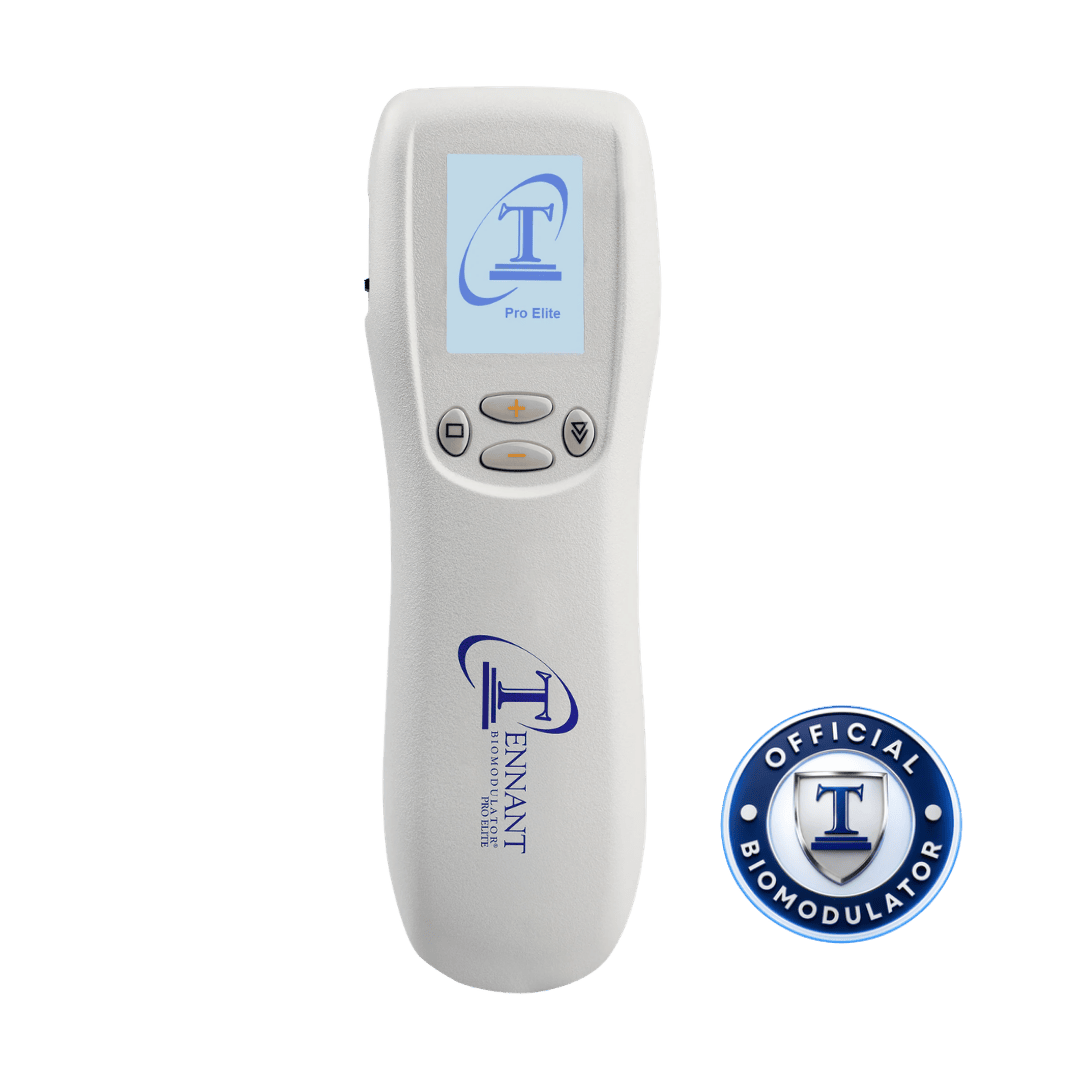
Tennant BioModulator®
Provides targeted, contact-applied electrical support after polarity. Its real-time biofeedback reads tissue response and continuously adjusts its microcurrent output during use.
- Application
- Targeted contact
- Primary Role
- Adaptive support
- Response
- Real-time biofeedback
Discuss the Current Technologies with Tennant Health.
Ask practical questions about the BioTransducer®, BioModulator®, owner education and how the Tennant System is structured.
Device selection and use should follow current product information, official instructions and appropriate Tennant Health education. Individual experiences vary.

Scar Support Is Guided Through Education.
The public website explains why fully healed scars are considered within Dr. Tennant’s framework and how the two technologies serve different roles.
Detailed application guidance—including device placement, settings, timing and the structured Scar Integration Protocol—belongs inside official owner education. This helps owners learn the purpose and sequence of each step within the complete Tennant System.
Fully Healed Scars
Public scar-support information applies only after an area is fully closed and healed.
Clear Support Boundaries
Tennant technology does not diagnose a scar, provide wound care or promise cosmetic scar removal.
Professional Evaluation
Open, infected, changing, persistent or worsening concerns should be discussed with an appropriate licensed professional.
Not Yet a Device Owner?
A complimentary discussion can help you compare the BioTransducer® and BioModulator®, understand owner education and ask practical questions about current-generation technology.
Schedule a Complimentary DiscussionAlready Own Tennant Technology?
Access structured education, scar-integration guidance, Power Hour learning and continuing resources through the Tennant Education Center.
Access Owner EducationOwner education is part of the Tennant System. It connects current-generation technology with structured learning, responsible application and ongoing educational support.

Explore Related Support Areas.
A fully healed scar may be one part of broader questions involving recovery, nervous-system communication or persistent discomfort. Explore the area that most closely reflects what you want to understand.

Recovery Support
Explore how comfort, energy, activity, rest and the pace of recovery can overlap within a broader support plan.
Explore Recovery Support
Nervous System Support
Learn how communication pathways, regulation and resilience are discussed within the Tennant educational framework.
Explore Nervous System Support
Chronic Pain Support
Understand persistent pain patterns and how Tennant technology fits within a structured bioelectric support approach.
Explore Chronic Pain SupportScar Support Questions & Answers.
Clear answers about fully healed scars, the Tennant framework, current-generation technology and guided owner education.
Detailed scar-integration application guidance is reserved for official Tennant owner education.
Scar support means considering how a fully healed scar may relate to comfort, sensation, movement and the broader Tennant educational framework. It does not mean removing the scar, reopening the tissue or providing wound care.
Yes. A fully healed scar can remain raised, indented, tight, tender, itchy, numb or sensitive. Its location may also affect comfort during certain movements or activities. Persistent, worsening or unexplained concerns should be professionally evaluated.
No. Tennant Health does not present its technology as cosmetic scar removal, wound care, diagnosis or a replacement for medical treatment. This page provides education about supportive technology and Dr. Tennant’s framework.
Within Dr. Jerry Tennant’s Healing Is Voltage® framework, a scar is considered as a possible area of interruption within electrical communication pathways, even when the surface has healed. This describes the Tennant educational framework and is not a diagnosis or established medical conclusion about an individual scar.
The Tennant sequence begins with polarity. The BioTransducer® provides contact-free scalar technology used to support polarity, electrical orientation and broader balance before targeted, contact-applied support is introduced.
The BioModulator® follows polarity support and provides targeted, contact-applied adaptive microcurrent. Its real-time biofeedback reads tissue response and adjusts its output throughout use.
This public page discusses fully healed scars only. Do not use general website information as instructions for an open, infected, newly closed or changing area. Seek appropriate professional guidance and follow current official device instructions.
Current owners can access structured scar-integration guidance through Tennant Owner Education. If you are exploring the current technologies, a complimentary device discussion can help you compare the devices and understand the education and support included with ownership.
Tennant Health information is educational and is not intended to diagnose, treat, cure or prevent disease. Individual experiences vary.