

Bioelectric Foundations
What Is Bioelectric Signaling?
Bioelectric signaling is the way cells and tissues use changes in electrical charge to send information and coordinate activity. These signals work alongside the body’s chemical processes and are especially familiar in the nervous system, muscles and heart.
Within Dr. Jerry Tennant’s Healing Is Voltage® framework, bioelectric signaling is explored through the relationship between polarity, cellular voltage, communication pathways and the body’s ability to respond.
A signal is only useful when it can be created, carried and answered.
Follow a Bioelectric Signal
Select each stage to see how an electrical message can move from its starting point to a coordinated response.
Changes in electrical charge begin the message.
Cells maintain differences in electrical charge across their membranes. When those conditions change, an electrical message can begin and provide information to nearby cells, tissues or connected pathways.
The message must reach the appropriate destination.
Electrical activity can move through individual cells or organized pathways. This movement helps information travel from one location to another so connected areas can communicate and coordinate activity.
The receiving area interprets and answers the signal.
Once the message arrives, the receiving cell, tissue or system can change its activity in response. This helps the body coordinate processes such as sensation, movement, regulation and adaptation.
This simplified explorer is educational and does not represent every form of cellular or nervous-system communication.
Why Signaling Matters
Electrical Messages Help Coordinate the Body
Bioelectric signals are part of how cells and body systems share information. They work alongside chemical signals and other biological processes to help coordinate activity and response.

Cellular Communication
Changes in membrane voltage help cells exchange information and adjust their activity in response to changing conditions.

Nervous-System Activity
Neurons use rapid electrical changes to carry information between the brain, spinal cord and areas throughout the body.

Sensation & Awareness
Electrical activity helps relay information about touch, temperature, pressure and physical sensations.

Movement & Coordination
Nerve signals help muscles activate, relax and work together to support purposeful, coordinated movement.

Adaptation & Regulation
Signaling helps body systems recognize and respond to changing conditions inside the body and in the surrounding environment.

Recovery Coordination
Coordinated signaling participates in the body’s ongoing regulation and response following stress, exertion or activity.
Bioelectric signaling is not one isolated process. It is part of a connected communication system that helps cells, tissues and larger biological systems coordinate their activity.
Understanding the Message
When Signaling Becomes Less Coordinated
Bioelectric communication is more than simply turning a signal on or off. A message can be affected at its starting point, along its pathway, at the receiving destination or through the timing of the response.

Multiple messages require organization.
The nervous system and other signaling networks continually receive information. When many inputs compete for attention, the body must sort, prioritize and coordinate the information before producing an appropriate response.
Is there more input than the system can efficiently organize?
The route influences how the message travels.
Physical stress, injury, inflammation and other health factors can influence how information moves through tissues and connected pathways. The cause of a change cannot be identified from one sensation or experience alone.
Has something changed how or where the message travels?
A message must also be answered.
A signal can reach its destination without producing the same degree or speed of response. Effective communication depends on both the message and the receiving cell, tissue or system being able to respond.
Is the receiving area responding to the information as expected?
Sequence and timing help create coordination.
Coordinated activity depends on signals arriving and being answered in an appropriate sequence. When timing changes, separate parts of a larger response can become less organized.
Are the signals arriving and being answered in a coordinated sequence?
Changes in sensation, movement, energy or regulation can have many possible causes. This explorer does not assess symptoms or provide a diagnosis. Persistent, unexplained or worsening concerns should be discussed with an appropriate licensed healthcare professional.
The Tennant System
Two Technologies. Distinct Roles.
The BioTransducer® and BioModulator® provide different forms of bioelectric support. Each can be used independently or as part of a coordinated, education-guided Tennant System approach.
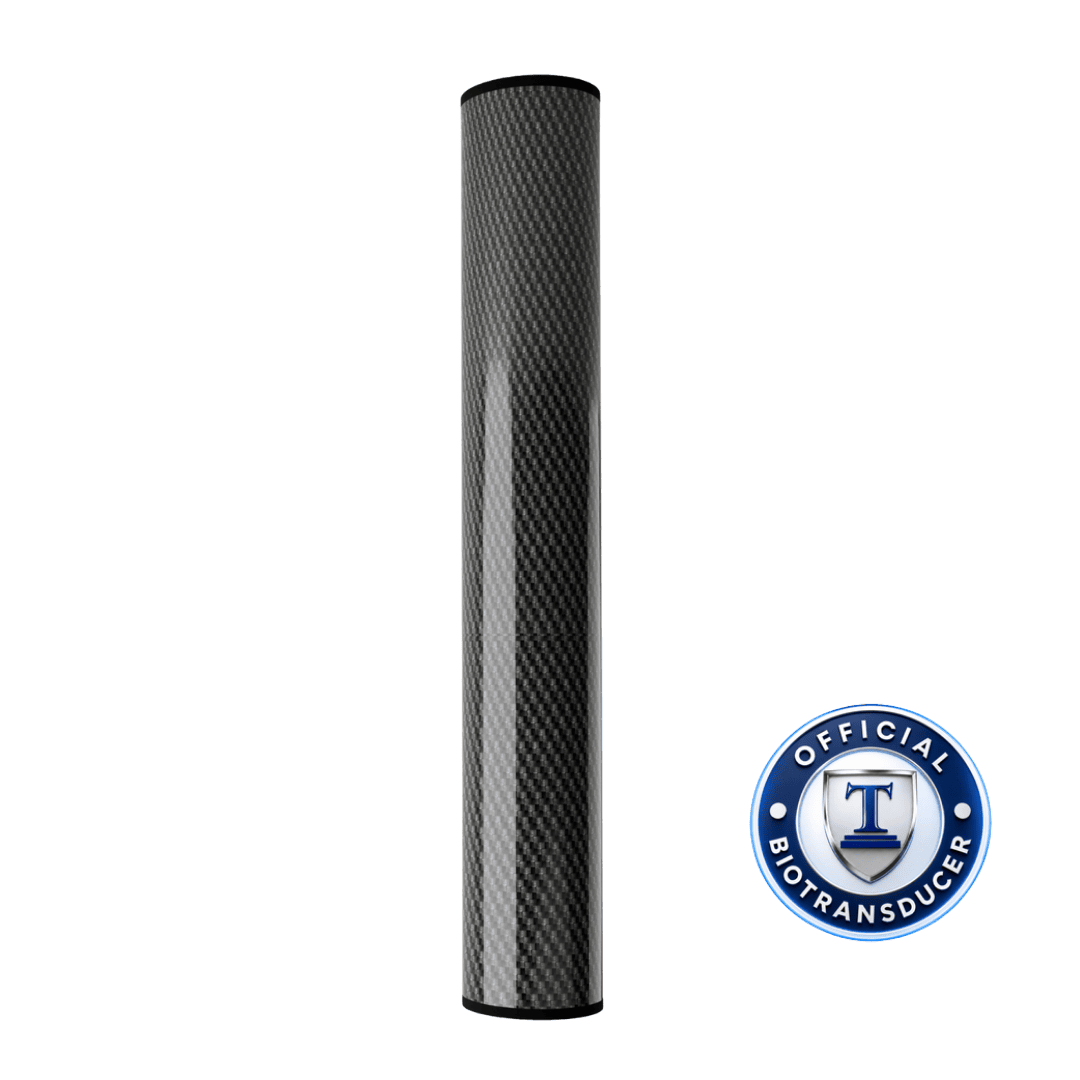
Tennant BioTransducer®
The BioTransducer® is designed to support polarity and electrical orientation through a structured scalar field. It is used near the body without touching the skin and works through clothing.
- Supports polarity and directional balance
- Contact-free application
- Works through clothing
- Used within guided Tennant protocols
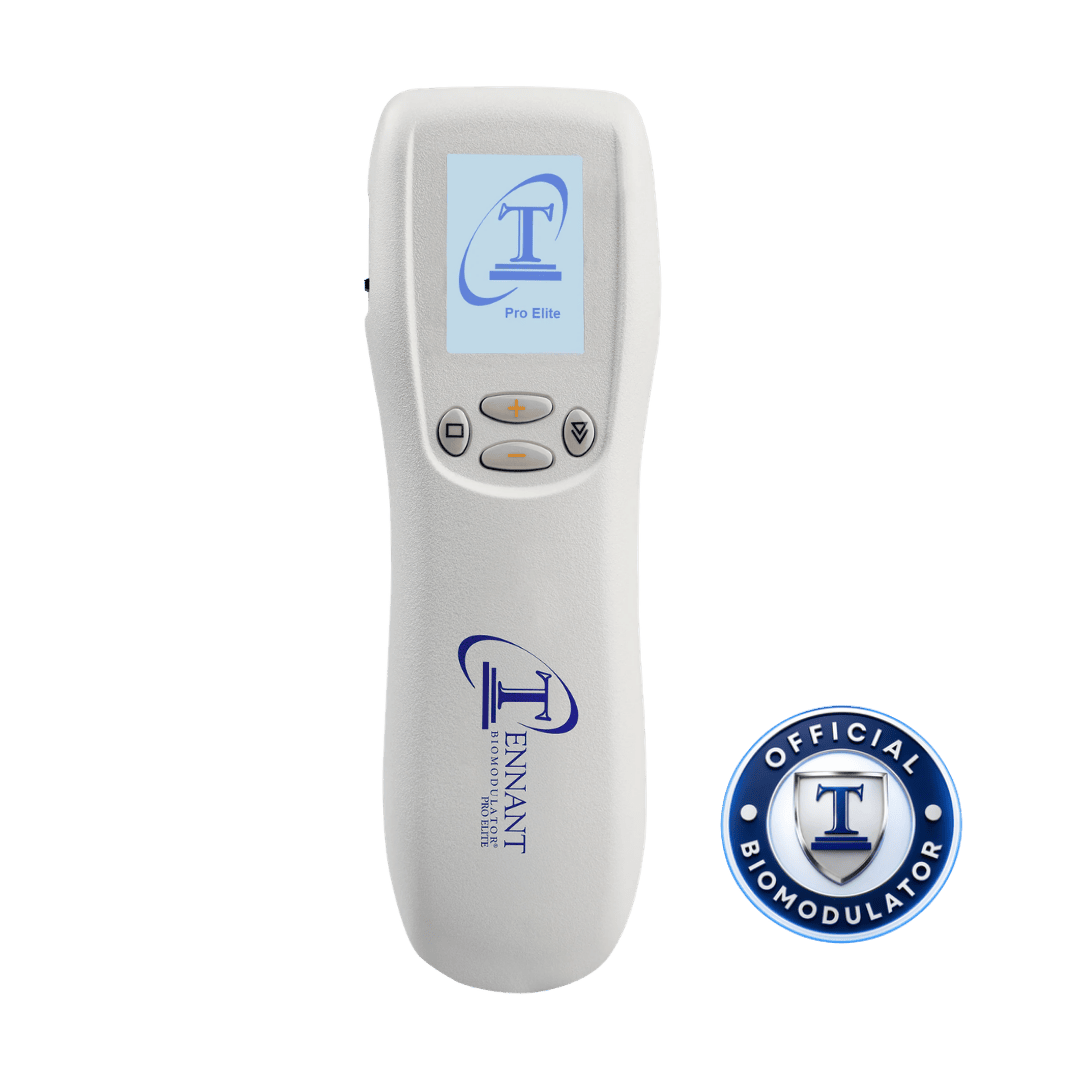
Tennant BioModulator®
The BioModulator® is applied directly to the skin and delivers bioadaptive microcurrent. Real-time biofeedback reads the changing electrical interaction with tissue and adjusts output during use.
- Contact-applied microcurrent
- Reads tissue interaction
- Adjusts output in real time
- Supports targeted, protocol-guided use
Different technologies with coordinated education.
The BioTransducer® supports polarity through contact-free scalar technology. The BioModulator® provides targeted bioadaptive microcurrent at the point of contact. Guided education helps owners understand how each technology fits within the Tennant System.
Technology Supported by Education
Understanding the purpose and application of each technology is an important part of the Tennant System. Current-generation device owners receive structured educational resources designed to support informed, consistent and confident use.

Education helps connect the underlying bioelectric concepts with practical device understanding.
What owner education can include
Select an area to explore the learning and support available.
A central place for owner learning
The Owner Education Center brings together learning materials that help current-generation owners understand the Tennant framework, the role of each technology and the reasoning behind structured application.
Learn the role of each technology
Device-specific education helps owners understand how the contact-free BioTransducer and contact-applied BioModulator serve distinct purposes within a coordinated support system.
Continue learning as questions develop
Continuing education opportunities, including Power Hour learning sessions, help owners expand their understanding, revisit key concepts and explore practical questions over time.
Support does not end with the device
Owner resources and Tennant Health support provide a pathway for practical questions, educational updates and continued engagement with the current-generation system.
Build a Clearer Understanding of Bioelectric Support
Explore the foundational concepts and connected systems that help explain how the Tennant approach supports communication, coordination and whole-body responsiveness.
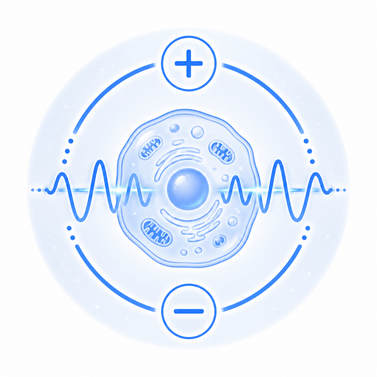
Why Does Cellular Voltage Matter?
Explore how electrical charge across cell membranes supports communication, energy use and responsive biological function.
Explore Cellular Voltage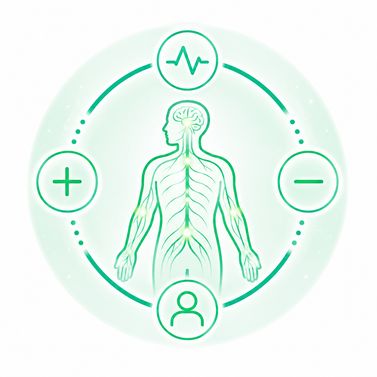
How Does the Nervous System Communicate?
Learn how organized electrical signaling helps the nervous system receive information, coordinate responses and adapt to change.
Explore Nervous System Support
See How the Tennant System Works
Follow the structured relationship between polarity, voltage, adaptive support, owner education and coordinated technology.
Explore How It Works